Interactive Dashboards with FileMaker and Studio

Claris Studio and Claris FileMaker now work together to deliver real-time, interactive dashboards that combine Studio’s modern web interface with FileMaker’s powerful backend logic. This enables businesses to publish analytics dashboards, client reporting tools, or operational monitors externally without compromising data integrity or relying on third-party BI software.

Real-Time Dashboards Powered by FileMaker Data

Data stays in FileMaker, but Studio presents it in dynamic, user-friendly views. Dashboards can include:

  • Live operational metrics
  • Customer order status
  • Production KPIs
  • Financial summaries
  • Inventory levels
  • Project progress
  • Field updates

Studio’s visual components refresh based on FileMaker’s database changes, ensuring dashboards reflect the latest information.

Perfect for External Reporting

Because Studio is cloud-native, dashboards can be shared securely with:

  • Clients
  • Vendors
  • Executives
  • Field service teams
  • Remote operations staff

Each user sees only the data they are permitted to access, tied to FileMaker’s record-level permissions.

Clean, Modern Visuals: No Third-Party BI Tool Required

Studio allows developers to build:

  • Charts
  • Lists
  • Interactive grids
  • Summary blocks
  • Filterable tables

All fully connected to the FileMaker database. This replaces the need for platforms like Power BI, Tableau, or custom web dashboards in many cases.

Why This Matters

Using FileMaker + Studio for dashboards gives organizations:

  • A unified analytics environment
  • Secure external reporting capabilities
  • Real-time visibility on critical metrics
  • A low-code, fast-to-deploy BI alternative
  • One platform for internal and external users

Studio becomes a powerful presentation layer, while FileMaker remains the secure, customizable operational engine.

Want to build modern dashboards powered by Claris FileMaker?
Reach out to Kyo Logic here.



Can Your FileMaker Do This: FileMaker vs AI Built Apps vs Enterprise Suites Guide

Can Your FileMaker Do This? FileMaker, AI-Built Apps, and Enterprise Suites: A Practical Guide

Teams have great options today. Enterprise suites like Salesforce or Oracle bring breadth and governance. AI-built apps (custom code with GPT-style copilots) offer full creative freedom. FileMaker 2025 (with Claris Studio + Claris Connect) adds a low-code layer for the everyday work: forms, approvals, exceptions, and quick changes.

This is about picking the right tool and helping them work well together.

The Landscape (What Each Does Best)

Enterprise Suites (Salesforce/Oracle/etc.)
Ideal as systems of record with strong data models, compliance, and mature ecosystems. Strong for standardized processes that don’t change often.

AI-Built Apps (custom code + copilots)
Great for new experiences and bespoke logic when you want full UI freedom or internet-scale delivery.

FileMaker 2025 (with Studio + Connect)
A natural fit as the operations layer for departmental workflows, field capture, and dashboards (the work that shifts month to month and involves real people and real context).

Why FileMaker (What It Does Uniquely Well)

  • Operations-in-a-box: Data, UI, scripts, and security in one place, so changes are fast and safe.
     
  • Governed agility: Roles, logging, and auditable changes without a sprawling codebase.
     
  • Field-ready inputs: FileMaker Go + Claris Studio handle photos, scans, GPS, signatures. No custom app required.
     
  • Event-driven automation: Event-Driven Connect turns record changes into Slack/Teams alerts, tickets, emails, and documents.
     
  • Standards at the edge: OData (Power BI), Data API/eDAPI, and JSON for clean hand-offs to the broader stack.
     
  • Incremental modernization: Keep Salesforce/Oracle steady; add FileMaker where hands-on work happens. Quick wins, low disruption.
     

Who tends to benefit most

  • Departments of 10–200 daily users (Ops, Supply Chain, Field Service, QA, Facilities, Finance Ops)
     
  • Teams juggling spreadsheets, email approvals, and plug-ins
     
  • Organizations that need mobile/web data capture without funding a full custom app build
     

Where Each Typically Wins

Enterprise suites are strong for: deep modules (CPQ/ERP), strict compliance, global scale with unified governance.

AI-built apps are strong for: highly branded, external-facing portals; novel algorithms/services; full framework freedom.

FileMaker is strong for: rapidly evolving or highly custom internal workflows, immediate field capture, event-driven automations, and fast time-to-value.

How FileMaker Works Alongside Salesforce/Oracle

Common patterns

  • Keep the system of record in Salesforce/Oracle.
     
  • Use FileMaker as a system of engagement where people enter, review, approve, and act.
     
  • Bridge them with:
     
    • Claris Connect for “when X happens → do Y” workflows
       
    • Data API/eDAPI for JSON hand-offs
       
    • OData for analytics in Power BI/Tableau
       
    • SSO (Okta/Azure AD) for unified identity
       

Example flows

  • Case Management: A case in Salesforce triggers a FileMaker triage workspace (Studio forms + dashboards); updates return to Salesforce.
     
  • Manufacturing/Logistics: Oracle holds inventory; FileMaker handles receiving, QC, and exceptions on the floor; results sync back via Connect/Data API.
     
  • Healthcare/Education: Core records live in the suite; FileMaker covers mobile intake, audits, and scheduling with role-based access.
     

Quick Start (Non-Technical)

  1. Choose one pain point outside the suite (spreadsheets, email approvals, field capture).
     
  2. Mirror the workflow in FileMaker/Studio: one browser form + one small dashboard.
     
  3. Connect to Salesforce/Oracle via Connect or Data API (start one-way, then add updates).
     
  4. Trigger actions on events (status change → Slack/Teams → ticket/doc/email).
     
  5. Pilot for two weeks and measure time saved, fewer errors, and faster visibility.
     

Next step: Want to see how this can look in your environment? We can stand up one FileMaker/Studio workflow, one automation, and one suite integration so you can evaluate impact before scaling.


Container Field Optimizations: Metadata & Image Handling

FileMaker 2025 introduces significant improvements to how container fields manage and process images, documents, and other media. These optimizations make it easier for developers to build apps that handle large volumes of assets efficiently—while giving users richer, faster access to the files they need.

Faster Image and Media Handling

Container fields now process and display images more efficiently, improving performance for apps with media-heavy layouts. Users will notice faster load times when viewing records with embedded photos, logos, or scanned documents—especially on mobile devices running FileMaker Go or in WebDirect.

For developers, this means less time optimizing layouts and more time focusing on app logic.

Built-In Metadata Access

FileMaker 2025 introduces new tools to extract and store metadata from images and files in container fields. This allows developers to:

  • Automatically capture EXIF data from photos (date, time, GPS, camera settings)
     
  • Store and search by keywords or tags
     
  • Index attributes like file size or type for better filtering
     

This built-in metadata support eliminates the need for custom plug-ins or external scripts to manage file information.

Smarter Image Management Workflows

Combining faster rendering with metadata extraction opens up new possibilities for workflow automation:

  • Field Service Apps: Attach photos from site visits with automatic time and location stamps.
     
  • Quality Control: Store test-run images with embedded metadata to prove compliance.
     
  • Marketing Assets: Organize product images with tags for instant retrieval.
     

All of this happens natively in FileMaker, reducing the friction of managing large media libraries.

Why It Matters

Container field optimizations in FileMaker 2025 help businesses:

  • Improve app performance with media-rich records
     
  • Automate metadata capture for stronger record-keeping
     
  • Search and filter assets faster without third-party tools
     

For organizations that rely heavily on images or documents—such as manufacturing, healthcare, or field services—these improvements transform FileMaker into an even more capable media management platform.

With faster image handling and built-in metadata access, FileMaker 2025 makes managing container fields more powerful and efficient. Developers can build richer, more responsive apps while users gain quicker, smarter access to critical media assets.

Want to see how Claris FileMaker can streamline your image and document workflows? Reach out to Kyo Logic here.


Enhanced Perform Script on Server with Callback: Pause and Resume for Greater Control

You might not be aware that Claris has provided significant enhancements to FileMaker’sPerform Script on Server (PSoS) feature, giving developers more power and flexibility than ever. With new callback capabilities and pause/resume options, PSoS workflows can now deliver smoother user experiences and more efficient server-side processing.

These updates are especially impactful for teams building apps that rely on real-time data updates, long-running processes, or multi-step server interactions.

How to Leverage Perform Script on Server?

Recent PSoS features introduces two key upgrades:

  • Callback Support – After a server-side script runs, FileMaker can now execute a designated callback script on the client, making it easy to handle results, refresh layouts, or trigger additional logic.

  • Pause and Resume Options – Developers can now pause a PSoS session and later resume it, allowing for multi-step workflows without holding up server resources unnecessarily.

These improvements mean developers no longer need to rely on workarounds like polling or complex script chaining to keep clients in sync with server-side processes.

Why It Matters

In traditional PSoS implementations, a script would run on the server and either finish silently or require additional scripts to manage user feedback. With callbacks and pause/resume, developers gain:

  • Improved User Feedback: Automatically notify users when server-side tasks complete, display results, or update UI elements.

  • Greater Workflow Flexibility: Pause scripts during lengthy processes like imports or API calls, then resume when needed.

  • Reduced Resource Usage:  Free up server threads during wait times or external calls.

  • Simpler Code: Replace complex polling or looping with clean, callback-driven workflows.

Example Use Case: Generating Reports Asynchronously

Consider an app where users request PDF reports that take time to compile. With enhanced PSoS:

  1. The user triggers the report request.

  2. A PSoS script starts generating the report server-side and pauses if needed while waiting for large data imports or calculations.

  3. Once complete, the callback script on the client updates the UI with a “Your report is ready” message and provides a download link.

This workflow keeps the user interface responsive without forcing them to wait for the entire server process to complete.

Developer Benefits

In addition to improving user experiences, these PSoS enhancements help developers:

  • Streamline Codebases: Fewer workarounds and cleaner separation of client/server logic.

  • Build Smarter Apps: Support more complex, multi-step server workflows with minimal UI interruption.

  • Support Scalability: Handle more concurrent users efficiently by freeing server resources during pauses.


The enhanced Perform Script on Server with callback and pause/resume options is a game changer for FileMaker developers. It enables richer client interactions, smarter server workflows, and more efficient resource usage— all key for building responsive, scalable solutions. Interested to learn how Kyo Logic can help you leverage these new features in your FileMaker apps? Reach out to us here.


Automate Data Routing Between Apps with Claris Connect

Data lives everywhere—sales teams use Slack, managers rely on Google Sheets, and core business workflows run through FileMaker. Manually moving data between these platforms is tedious, error-prone, and costly. The solution? Automation.

Claris Connect enables businesses to route data between their favorite apps automatically, eliminating manual handoffs and keeping systems in sync. Whether you’re updating leads, pushing orders to spreadsheets, or sending alerts to team chat, Claris Connect reduces friction, improves accuracy, and saves time.

The Problem with Manual Data Transfer

Switching between apps and copying data by hand creates a host of issues:

  • Wasted Time – Employees spend hours retyping or exporting/importing data.

  • Human Error – Typos, missed updates, or out-of-sync records disrupt workflows.

  • Disconnected Systems – Critical tools like Google Sheets, Slack, and FileMaker don’t talk to each other.

  • Missed Notifications – Teams rely on inboxes or memory to catch task updates.

Claris Connect acts as the “glue” that ties these systems together—no code required.

How Claris Connect Automates Cross-App Workflows

Claris Connect enables users to build automated flows (called flows) that pass data between apps based on triggers and rules. With it, you can:

  • Sync Data Between FileMaker and Google Sheets
    Automatically push form submissions, project data, or test results from FileMaker into Google Sheets—or pull spreadsheet updates into FileMaker.

  • Send Notifications in Slack or Email
    When a record is created or updated in FileMaker, Claris Connect can alert your team in Slack or send a formatted email.

  • Route Web Form Submissions into FileMaker
    Connect tools like Typeform, JotForm, or Claris Studio to FileMaker in real time.

  • Schedule Routine Tasks
    Automate daily exports, report generation, or follow-up messages at set intervals.

  • Connect to Hundreds of Apps
    From Dropbox and QuickBooks to Trello and Mailchimp, Claris Connect expands FileMaker’s reach without rebuilding your tech stack.

Use Cases That Save Real Time

  • A support request submitted via Google Form creates a new ticket in FileMaker and alerts the service team in Slack.

  • A new FileMaker order logs into a shared Google Sheet for forecasting and triggers a notification for the shipping team.

  • At the end of each week, Claris Connect emails a summary of completed work orders from FileMaker to managers.

No scripting. No dev time. Just fast, no-code automation that keeps your systems in sync.

Claris Connect makes it easy to automate data routing between FileMaker and the tools your team already uses—reducing manual tasks, improving accuracy, and boosting efficiency. Whether it’s syncing spreadsheets, sending notifications, or tying together cloud services, Claris Connect keeps your workflows moving smoothly. Interested to learn more about how Claris Connect and Claris FileMaker can solve for cross-app automation? Reach out to Kyo Logic here.



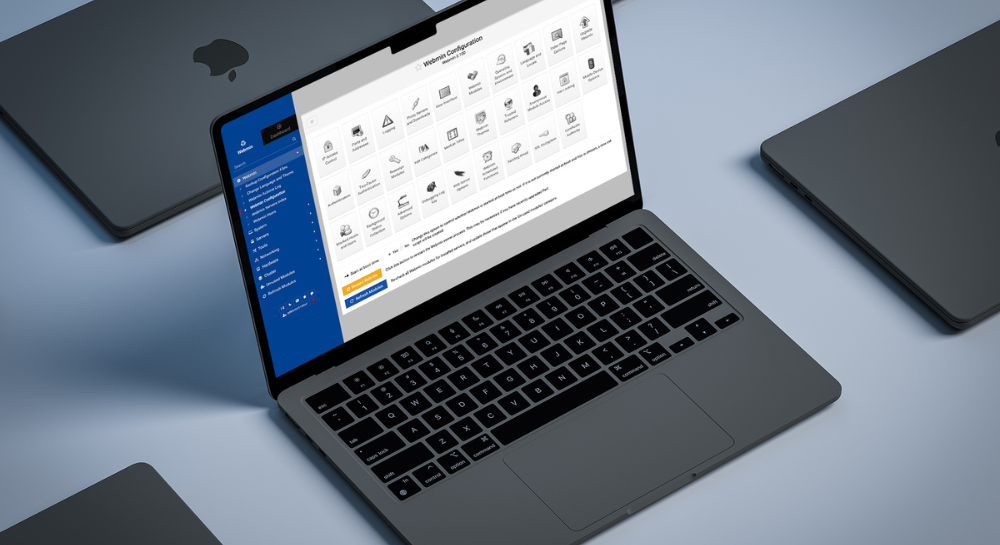
Kyo Logic and FMPConnect Present: A Step-by-Step Guide for Installing Webmin & Claris FileMaker Server

Kyo Logic has partnered with Oliver Reid and his company FMPConnect to provide an incredibly potent guidebook. You can click below right now to get an in-depth guide on exactly how to install Webmin and FileMaker Server on an Amazon Web Service (AWS) Ubuntu Virtual Instance.

DOWNLOAD


Installing with Webmin is perfect for IT professionals and developers who just don’t have extensive experience with Linux. As powerful as Linux is, it can be cumbersome to navigate if you’re unfamiliar, and can take valuable time to gain competency. But when you have access to Webmin, it simplifies the entire process. Everything is managed through Webmin’s GUI instead of having to manually edit configuration files or run commands.


While getting Webmin and FileMaker Server to work well with Ubuntu has historically been difficult, this guide provides a fast, consistent way to successfully set up both applications. By utilizing this guide, you can have everything up and running in just 20 minutes (not including downloads).


Everyone at Kyo Logic and FMPConnect thought this information was too impactful to keep to ourselves. We want to make sure everyone in the community has access to this process, as we believe the iterative, collaborative nature of the Claris community is what makes it so great.


Oliver Reid’s guide goes over every step of the process, from how to configure your Linux accounts to security and using Webmin to upload or download files to and from FileMaker Server. The guide includes:

  • Linux User Accounts, Permissions, and Directories Overview
  • Linux Repositories and Package Managers
  • Setting up an AWS Ubuntu Server
  • Connecting to the AWS Ubuntu Server
  • Installing Webmin
  • Installing FileMaker Server
  • Saving the AWS instance as an “AMI”
  • Securing Webmin with an SSL certificate
  • Uploading and Downloading FileMaker Server files using Webmin


Grab the guide now, and you’ll have detailed, step-by-step instructions paired with informative infographics and tables to make this previously impossible task feel effortless.


Check out FMPConnect for more great FileMaker and JSON tools. And follow Kyo Logic on LinkedIn to get access to more great guides and resources like this one.


We will be elaborating on this guide with additional details in the future. Stay tuned!

Why FileMaker is an Inexpensive Alternative to ERPs

Enterprise Resource Planning Systems allow organizations to manage (and in some cases automate) their core processes. ERPs may be leveraged in HR, finance, supply chain and manufacturing processes, or all of the above. Corporations rely on ERPs to provide benefits as varied as security and compliance management to collaboration and reporting.


Advanced manufacturers, banks, and hospitals are just a few of the industries that rely heavily on ERPs for everything from data storage to reporting to patient records.


Common ERPs include Oracle ERP Cloud, Microsoft Dynamics 365, and SAP ERP, although there are many more options available. And while these are incredibly powerful systems, they come with an equally incredible price tag. For enterprise-level businesses, it’s a bargain. But it makes the barrier for entry incredibly high for small and mid-size businesses that could otherwise benefit from some or all of these features.


FileMaker can offer an incredibly high degree of customization while also acting as a reasonable entry point into the world of ERPs. It works as a composable ERP– acting as the backbone while businesses can purchase the modules they need.Claris FileMaker provides:


High Degrees of Customization

Claris FileMaker allows for highly customized relational databases to fit the specific needs of virtually any requirement. While businesses may struggle to force their processes around out-of-the-box solutions, FileMaker can mold to these systems. It can do all this while providing many of the benefits of a traditional ERP, with comparatively minimal development and deployment costs.


Integration

Similarly, Claris FileMaker will integrate with any existing system. Just as importantly, it will integrate any new apps or software you introduce after the fact. It takes the customization aspect a step further. ERPs tend to provide a massive amount of disparate, specific functions (which is perfect for large companies that have a need for each of these functions), while Claris FileMaker


Scalability

FileMaker offers easy scalability as demands and needs increase. This is true not just from a systems perspective, but from a licensing perspective as well. Conversely, ERPs are designed for large corporations and may not scale down well for smaller operations.


Agility

FileMaker can be changed and adjust on the fly– in some cases, someone with limited experience could even make tweaks or updates. Its low-code nature makes in incredibly fast to navigate and use. While that’s great for novices, it also means that in the hands of a professional, overhauls and updates can happen several times faster than they could on other platforms. ERPs require longer set-up times.


Claris FileMaker does all this while offering lower licensing and maintenance fees. It makes the feature-rich environment of an ERP attainable for smaller businesses. It even provides ERP-like features for industries and businesses that wouldn’t be able to utilize an out-of-the-box ERP in the first place.


If you’re looking for ways to help transform your business and want to know more about what FileMaker can do, you can reach out to us here.

How FileMaker Can Reshape Compliance Management

Compliance management is a crucial component of many industries, including manufacturing, finance, healthcare, food, and government. Following procedures can mitigate risk and ensure both accuracy and efficiency. Oftentimes, these industries require a paper trail of records and complete data sets. 


While maintaining these industry and legal standards is vitally important, it’s also a massive undertaking. It requires the full attention of a number of individuals inputting data and triple-checking work. Larger organizations can have dozens (or even hundreds) of employees dedicated specifically to ensuring compliance is met.


Of course, even with all that redundancy, processes can still fail and data can still slip through the cracks. On top of that, compliance management demands a massive amount of time, energy, and resources– critical business capital that could be better spent elsewhere.


Claris FileMaker can provide a comprehensive, customizable system that automates, documents, and provides reporting down to the most granular detail. It provides invaluable structure no matter how specific the needs and requirements of the industry may be. Here are several ways Claris can completely reshape the way your business approaches compliance management. Let’s break down why clients like using Claris FileMaker for Compliance:


Customization

Claris FileMaker allows for completely customized, relational databases. Everything from tables, to fields, and relationships can be tweaked to your exact needs. The relational nature of the software means that every team and individual is working off the most accurate and up-to-date information.


Integration

Claris FileMaker ’s high degree of customizability makes it easy to integrate into virtually any existing ecosystem. Whether it’s mandated applications or software your company relies on, Claris FileMaker can easily communicate with these systems and even enhance their capabilities.


Flexibility

Similarly, Claris FileMaker makes integrating new tech straightforward and painless. As regulatory demands change, Claris FileMaker can serve as the foundational infrastructure. New software and applications can be leveraged without disrupting your existing ecosystem.


Automation

Workflows can be completely automated, streamlining processes and providing helpful support to compliance-focused teams. This can involve simple reminders or automatic scheduling of calendar events. It can get as complex as complete ownership of data entry and validation, leaving employees free to focus on more complex tasks.


Centralization

Store everything from reports to audits in a single database accessible from a variety of devices. Claris FileMaker’s highly customizable security measures allows for incredibly granular clearances and permissions.


Reporting

Just as with everything else, Claris FileMaker allows for detailed and customized reports. Data and insights can be collected, compiled and displayed to fit your exact needs. This makes it incredibly easy to provide information for audits and proof of compliance.


Compliance management is a necessary component of many businesses, but by its very nature, it’s incredibly taxing. Claris FileMaker can provide the means to streamline and modernize your compliance management systems, no matter how specific or esoteric the requirements.


If you’d like to find out more about how Claris Filemaker can impact your compliance management, you can reach out to Kyo Logic here. We’d love to provide you with a free consultation and demonstrate the benefits of a customized software solution.

How FileMaker Can Give Your Fantasy Football Team an Edge

Everyone at Kyo Logic is always talking about just how powerful FileMaker is– it can be used to create all kinds of helpful professional applications. We’ve shown off plenty of ways we leverage it to help businesses solve problems and fill specific needs. That includes everything from complex, unique applications to automating and streamlining basic data entry.


But it’s also fantastic for everyday use. Patrick, a seasoned Kyo Logic developer, uses FileMaker to give him an edge when it comes to NFL and NCAA football. Why does he take his work home with him? Is it because he loves analyzing stats? Is it because he’s super competitive and wants an edge? Does he just love FileMaker that much? The answer is all of the above.


College Ball

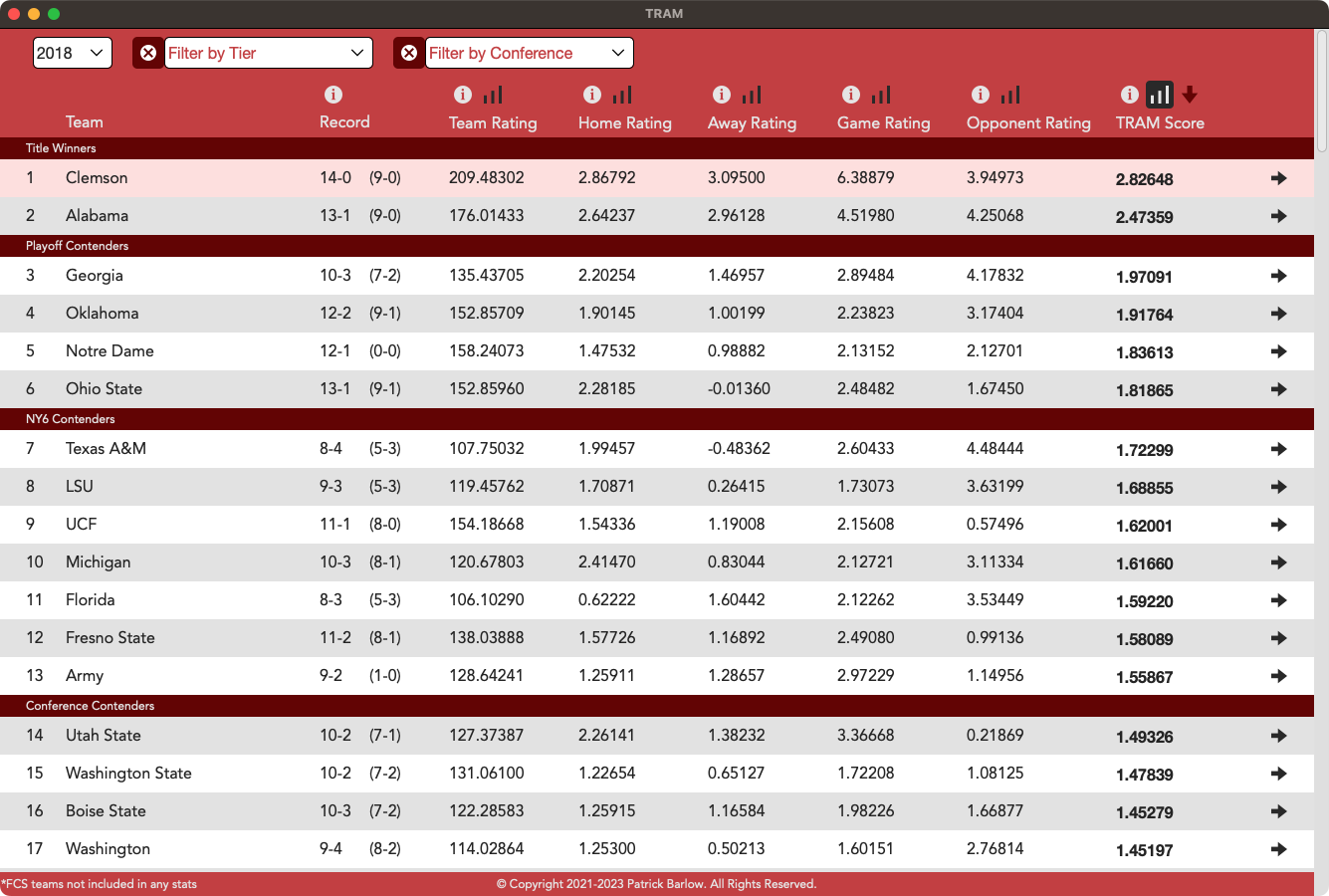
Patrick runs a successful and informative blog, 1 Nerd Sports, that delves into the numbers behind successful college teams. He loves college football. And he’s been able to weave his knowledge of FileMaker in with that passion.


His app takes the results of every game and builds a model based on key factors. It provides an objective list of team rankings based solely on performance. It also allows Patrick to dive into specific teams, players, and years. Patrick has built it to be completely automated; his app pulls from the NCAA API (application programming interface) that updates every game.


The app focuses on factors like a team’s win and loss percentages, average margin of victory and loss, and compares it to the opponents stats. His model accurately predicts spreads about 65% of the time. Patrick isn’t one to brag, but considering how many other factors are at play in the sport… those are pretty solid numbers.


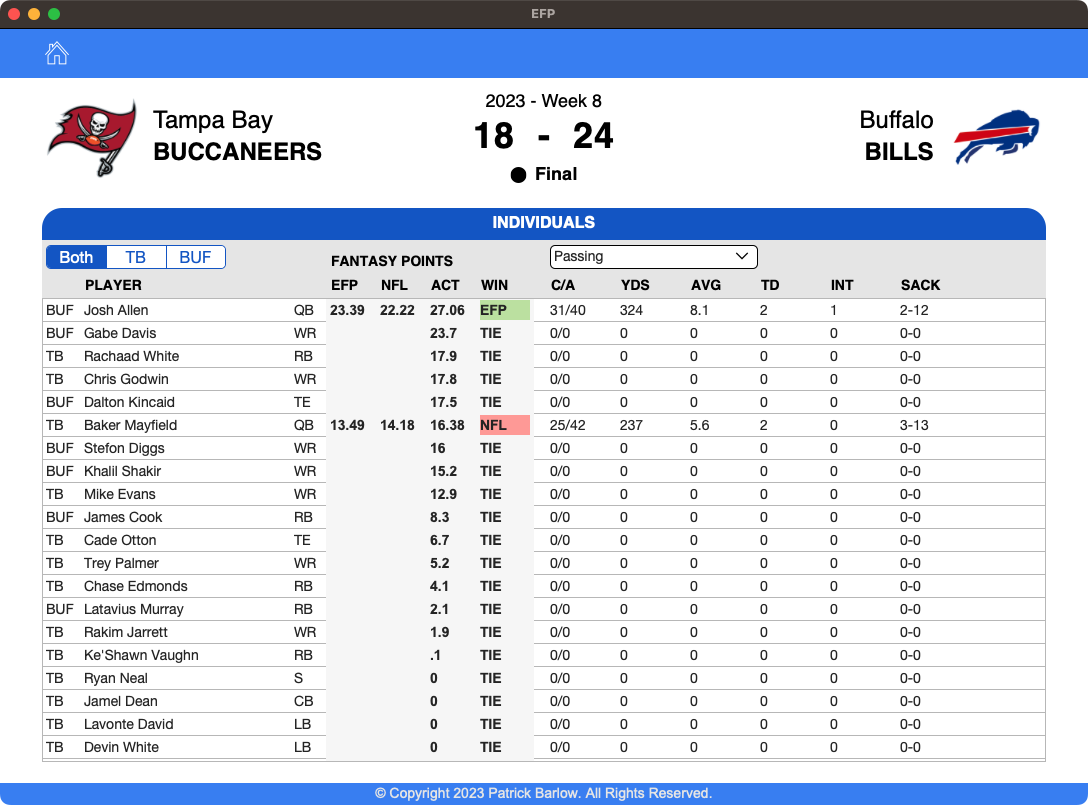
More recently, Patrick has also built an app to give him an edge in fantasy football. Similar to his college app, it plugs players stats in and makes recommendations on who to play and bench in a given week. So far, it’s been more accurate than the NFL’s own recommendations.

Fantasy FileMaker

Patrick uses FileMaker for his hobbies not just because he’s an expert. It also gives him a level of flexibility and control other languages and tools don’t offer. It’s also easy enough to navigate that any of his friends can (and do) use these apps.


But most importantly, it’s the fact that it’s a relational database. FileMaker understands how to relate different tables and values. It makes it incredibly intuitive for a stat-heavy game like football– it understands how to scrape data from weekly games and apply it to individual players or specific teams, almost instantly. It can also make changes and adjustments easily. If Patrick needs to add or swap parameters, he can do so on the fly and see the changes reflected in real time. It also provides the backend and frontend for the application, so everything is in one spot. It makes for a nimble, flexible, and response application.


If you want to learn more about how Kyo Logic can enhance your business (or just need help with your fantasy team), you can reach out to us here.1

Major Claris Studio Updates

Through a series of announcements, Claris has revealed a host of new changes for FileMaker and everyone here at Kyo Logic is incredibly excited. For reference, Claris is changing the FileMaker name and bringing everything under the Claris umbrella. While the products remain the same, they now follow this new convention:

  • FileMaker Pro is now Claris Pro
  • FileMaker Server is now Claris Server
  • FileMaker Go is now Claris Go
  • Claris Connect is now Claris Studio

Claris wants to create a more cohesive, easier to understand identity. They also promise that this new structure will allow them to offer new and exciting products and tools. It’s also the perfect time for them to change the way customers can purchase these offerings.

Claris Studio (formerly Claris Connect) is Claris’s latest cloud-based platform (also, given the rebrand, get used to seeing the word “Claris” a lot). It provides most of the features of Claris/FileMaker Pro, all accessible from the web. Just as importantly, it makes accessing your platform via a mobile device or tablet much easier than it was in the past.

While FileMaker previously had more complex licensing, Claris Studio streamlines licensing models into a much more straightforward licensing model.  It also allows for the use of exciting, modern interface languages like Mongo (you may not know what it is, but trust us… your tech guys do).

Overall, this is a much more dynamic system that allows for more interactivity, more dynamic and customizable layouts (perfect for anything customer-facing), and offers new, even easier ways to connect to the other tools in your work environment. We’ve always recognized the power of FileMaker, but the new Claris Studio takes things to a whole other level.

If you have questions about what Claris Studio can do for you (or want to know more about how the changes from FileMaker to Claris will work for you), please reach out to us here. We’re happy to walk you through use cases and can even provide a free consultation!