What Happens When Your Business Outgrows Its Systems?

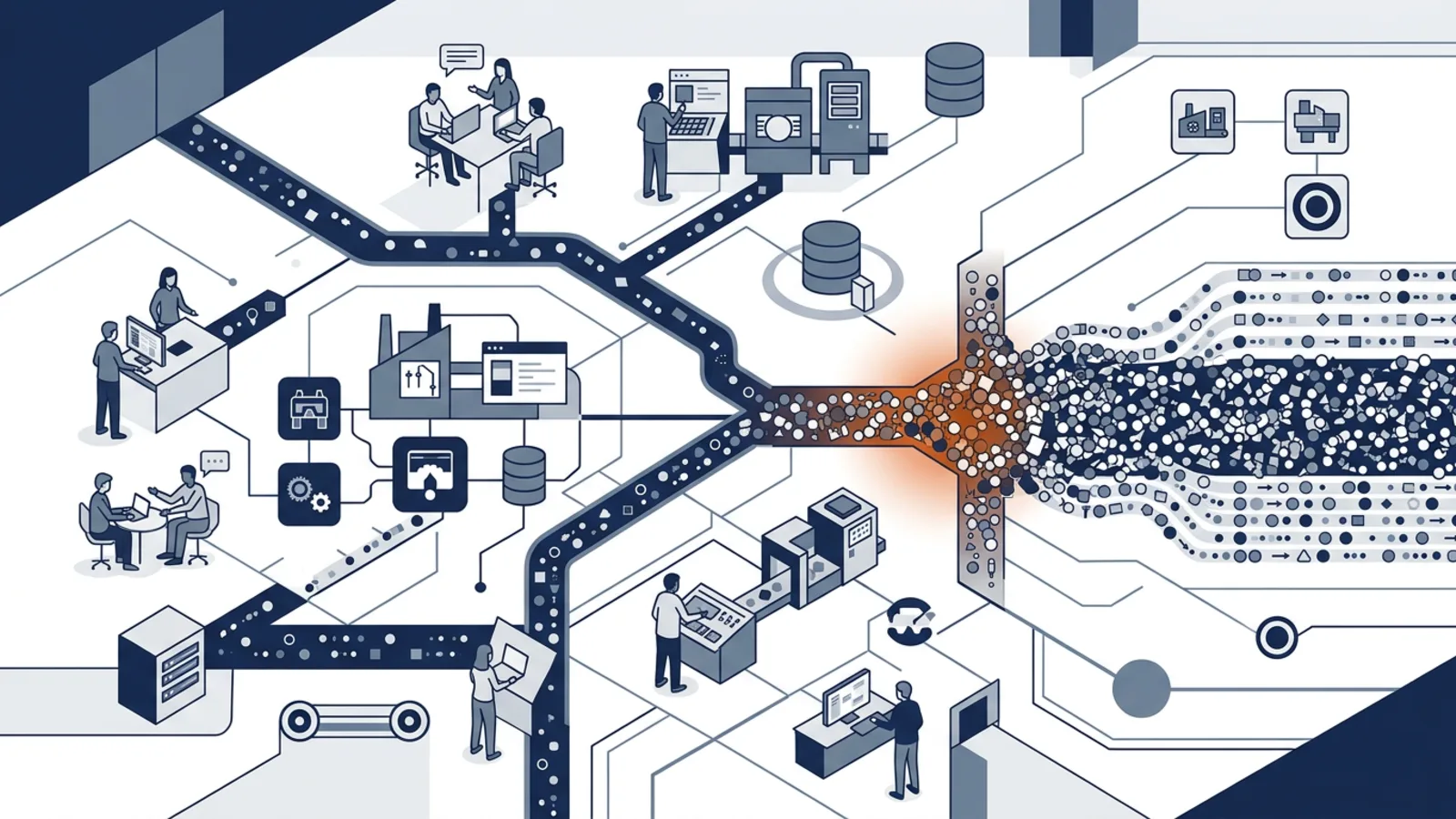
For many organizations, there comes a point when something feels off.

The business is growing. Customers are coming in. Revenue is increasing.

But internally, things feel harder than they used to.

Reporting takes longer. Processes require more coordination. Teams spend more time managing work than completing it.

You know you’ve outgrown something—but it’s not always clear what comes next.

The Signs Are Usually Familiar

Organizations often reach this stage when they notice:

  • More spreadsheets than ever before
  • Increasing manual work
  • Growing reliance on key employees
  • Longer onboarding cycles
  • Delayed reporting and decision-making
  • More operational exceptions

Individually, these issues seem manageable.

Collectively, they’re often signs that the business has outgrown its infrastructure.

Why This Stage Feels Frustrating

Many leaders recognize the problem but struggle to define the solution.

They know:

  • Existing systems aren’t scaling
  • Teams are working harder to achieve the same outcomes
  • Operational complexity is increasing

But they don’t necessarily know whether they need new software, better processes, more automation, or something else entirely.

The Challenge Isn’t Growth

Growth itself isn’t the problem.

The challenge is that systems designed for one stage of the business rarely support the next stage without modification.

Processes that worked for:

  • 10 employees
  • 100 customers
  • A single product line

often struggle to support:

  • 50 employees
  • Thousands of customers
  • Multiple departments and workflows

What Happens Next

The most successful organizations don’t try to solve every problem at once.

Instead, they begin by identifying:

  • Where manual work is accumulating
  • Which processes create the most friction
  • Where visibility is breaking down
  • Which workflows rely too heavily on individuals

From there, they build systems that support how the business actually operates today—not how it operated years ago.

Why This Matters

Outgrowing your systems is often a sign of success. It means the business has evolved.

The key is recognizing when infrastructure needs to evolve as well.

If it feels like you’ve outgrown your systems but aren’t sure what to do next, you’re not alone. Many organizations reach a point where growth exposes limitations that weren’t visible before. The next step isn’t necessarily replacing everything—it’s building systems that support the business you’ve become.

Interested in evaluating where your processes and systems can scale more effectively with Claris FileMaker? Reach out to Kyo Logic here.

Why Does Every “Fix” Create More Complexity?

Every organization encounters operational challenges.

A report needs to be tracked differently. A workflow doesn’t fit the current system. A department needs additional visibility.

The response is usually reasonable: create a spreadsheet, add a tracker, build a workaround.

The problem is that these fixes rarely replace complexity. They usually add to it.

How Complexity Accumulates

Most workarounds begin as temporary solutions:

  • A spreadsheet to fill a reporting gap
  • A shared document to track approvals
  • A manual process to bridge two systems
  • A separate database for a specific team

Each one solves a real problem.

But when the underlying issue remains, new fixes continue to accumulate.

The Compounding Effect

Over time, organizations end up managing:

  • Multiple spreadsheets
  • Duplicate data entry
  • Manual reconciliation
  • Parallel workflows
  • Department-specific tracking systems

Instead of reducing complexity, each solution introduces another layer that must be maintained.

Why More Tools Often Make Things Worse

When complexity increases, the instinct is often to add another tool.

Unfortunately, every new tool creates:

  • Additional data sources
  • New processes to manage
  • More integration challenges
  • More opportunities for inconsistencies

The result is an increasingly fragile operating environment.

Solving Root Causes Instead of Symptoms

A platform like Claris FileMaker helps organizations address the underlying workflow challenges rather than layering on additional workarounds.

Teams can:

  • Consolidate fragmented processes
  • Centralize operational data
  • Automate repetitive tasks
  • Eliminate duplicate workflows
  • Build systems that adapt as needs evolve

Instead of creating another fix, organizations create a stronger foundation.

Why This Matters

Complexity isn’t always caused by growth. Often, it’s caused by years of well-intentioned fixes that were never replaced with scalable systems.

Addressing root causes creates simpler, more resilient operations.

If every new fix seems to create another problem, it may be time to look beyond individual workarounds and evaluate the systems underneath them. Building scalable infrastructure with Claris FileMaker helps organizations simplify operations instead of adding layers of complexity.

Interested in reducing operational complexity with Claris FileMaker? Reach out to Kyo Logic here.

Why Do Processes Change Depending on Who’s Doing the Work?

Most organizations believe they have standardized processes. But if you ask three employees to complete the same task, you may discover three slightly different approaches.

One person follows a spreadsheet. Another references an email thread. Someone else relies on experience and memory.

The work gets done, but not always the same way.

When processes change depending on who’s doing the work, inconsistency becomes inevitable—and so do errors, delays, and rework.

How Process Variability Develops

This usually isn’t intentional.

As businesses grow, employees naturally develop their own methods for handling tasks:

  • Different ways to enter data
  • Different approval paths
  • Different reporting processes
  • Different interpretations of company procedures

Over time, these variations become normalized.

The Hidden Cost of Inconsistency

When workflows aren’t system-enforced, organizations experience:

  • Inconsistent outcomes
  • Higher error rates
  • More training requirements
  • Increased rework
  • Difficulty identifying root causes when problems occur

The challenge isn’t that employees are doing poor work. It’s that everyone is doing slightly different work.

Why Documentation Alone Isn’t Enough

Many organizations attempt to solve this issue with SOPs, training documents, and checklists.

While documentation is valuable, it often relies on employees remembering and following every step correctly.

Without system-level enforcement, processes gradually drift over time.

Creating Consistency Through Workflow Design

This is where Claris FileMaker can make a significant impact.

Instead of relying entirely on training and documentation, organizations can build workflows that:

  • Guide users through required steps
  • Enforce approvals automatically
  • Validate data before submission
  • Standardize reporting and outputs
  • Reduce opportunities for process variation

The result is a system that supports consistency without sacrificing flexibility.

Why This Matters

As organizations scale, consistency becomes increasingly important. Standardized workflows improve quality, reduce risk, and make growth easier to manage.

The goal isn’t to remove human expertise—it’s to ensure critical processes don’t depend on individual interpretation.

If the same task produces different results depending on who’s doing it, the issue may not be training—it may be infrastructure. System-enforced workflows help organizations deliver more consistent outcomes while reducing errors and rework.

Interested in building standardized workflows with Claris FileMaker? Reach out to Kyo Logic here.

You Don’t Have a Software Problem. You Have an Information Flow Problem.

When operations begin slowing down, many organizations assume they need new software.

The ERP feels outdated. The CRM isn’t keeping up. Reporting takes too long.

But in many cases, the software isn’t the real problem.

The real issue is that information isn’t moving efficiently between people, departments, and systems.

Information Gets Stuck in Unexpected Places

Operational information can become trapped in:

  • Email inboxes
  • Shared spreadsheets
  • Individual desktops
  • Department-specific applications
  • Manual approval processes

Every delay forces someone to stop working while they search for information, wait for an update, or manually enter data somewhere else.

Small Delays Become Large Bottlenecks

One manual approval may only take a few minutes.

One spreadsheet update may only take five minutes.

One email asking for clarification may seem insignificant.

Multiply those small delays across hundreds of transactions, jobs, or customer requests, and they become one of the largest sources of operational inefficiency.

Better Software Doesn’t Always Solve the Problem

Replacing software without improving information flow often creates new challenges.

Organizations end up with:

  • More applications
  • More integrations
  • More data silos
  • More manual reconciliation

Without improving how information moves, new software simply shifts the bottleneck elsewhere.

Build Better Information Flow

With Claris FileMaker, organizations can build workflows that allow information to move automatically between systems and departments.

Instead of relying on manual updates, teams can:

  • Connect existing applications
  • Automate approvals and notifications
  • Share real-time operational data
  • Reduce duplicate entry
  • Improve visibility across every workflow

The result is faster decisions and smoother operations without disrupting existing investments.

Why This Matters

Businesses move at the speed of their information.

When information flows efficiently, departments collaborate more effectively, customers receive faster service, and leadership gains better visibility into operations.

Many operational challenges are caused by information getting stuck, not by software failing. Improving information flow with Claris FileMaker helps organizations remove bottlenecks, enhance collaboration, and operate more quickly and with greater confidence.

Interested in improving information flow across your organization with Claris FileMaker? Reach out to Kyo Logic here.

Why Are Your Departments Solving the Same Problem Twice?

Every department is working hard.

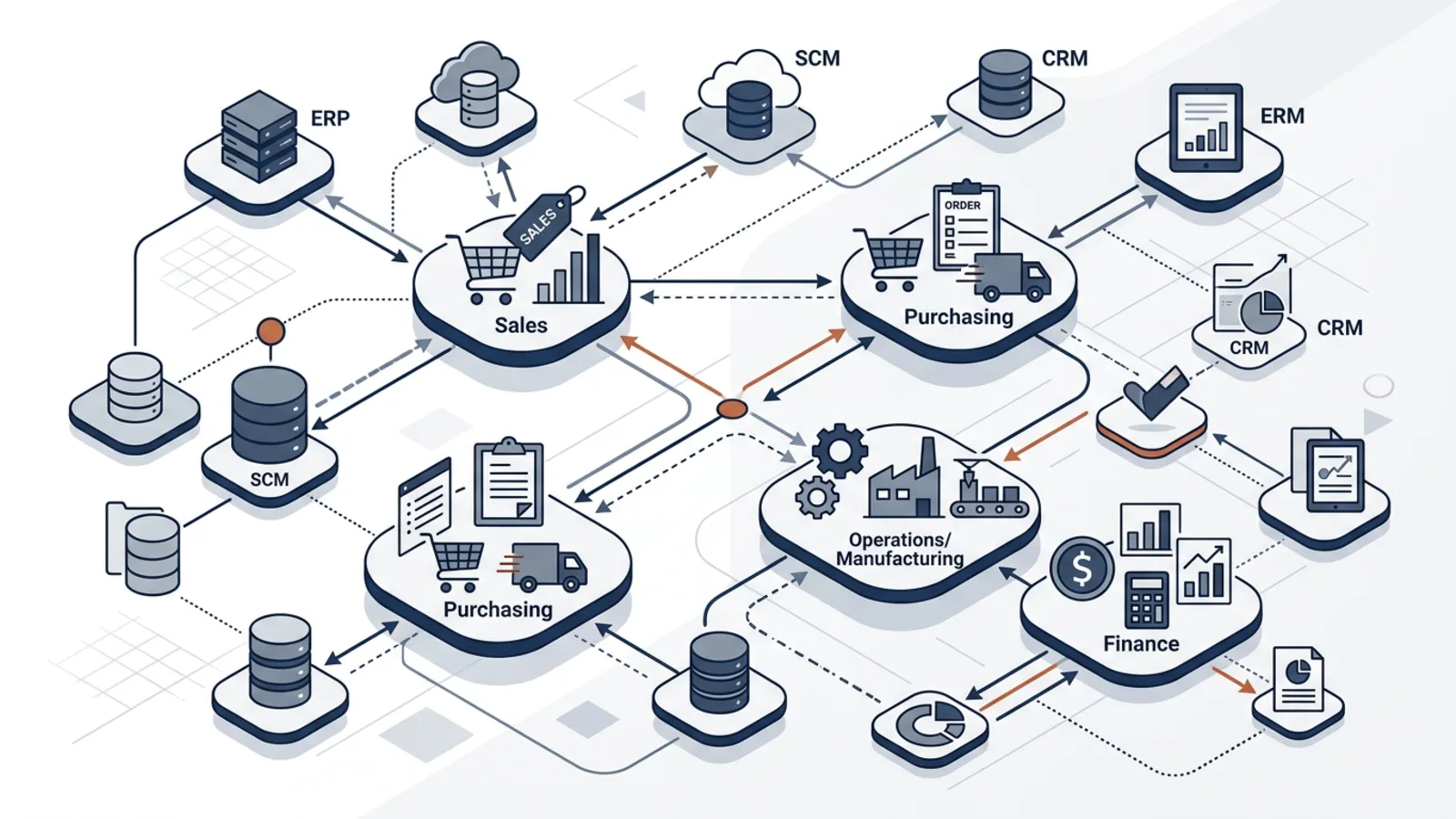
Sales is tracking customer information. Purchasing is managing vendors. Operations is scheduling production. Finance is reporting on costs and profitability.

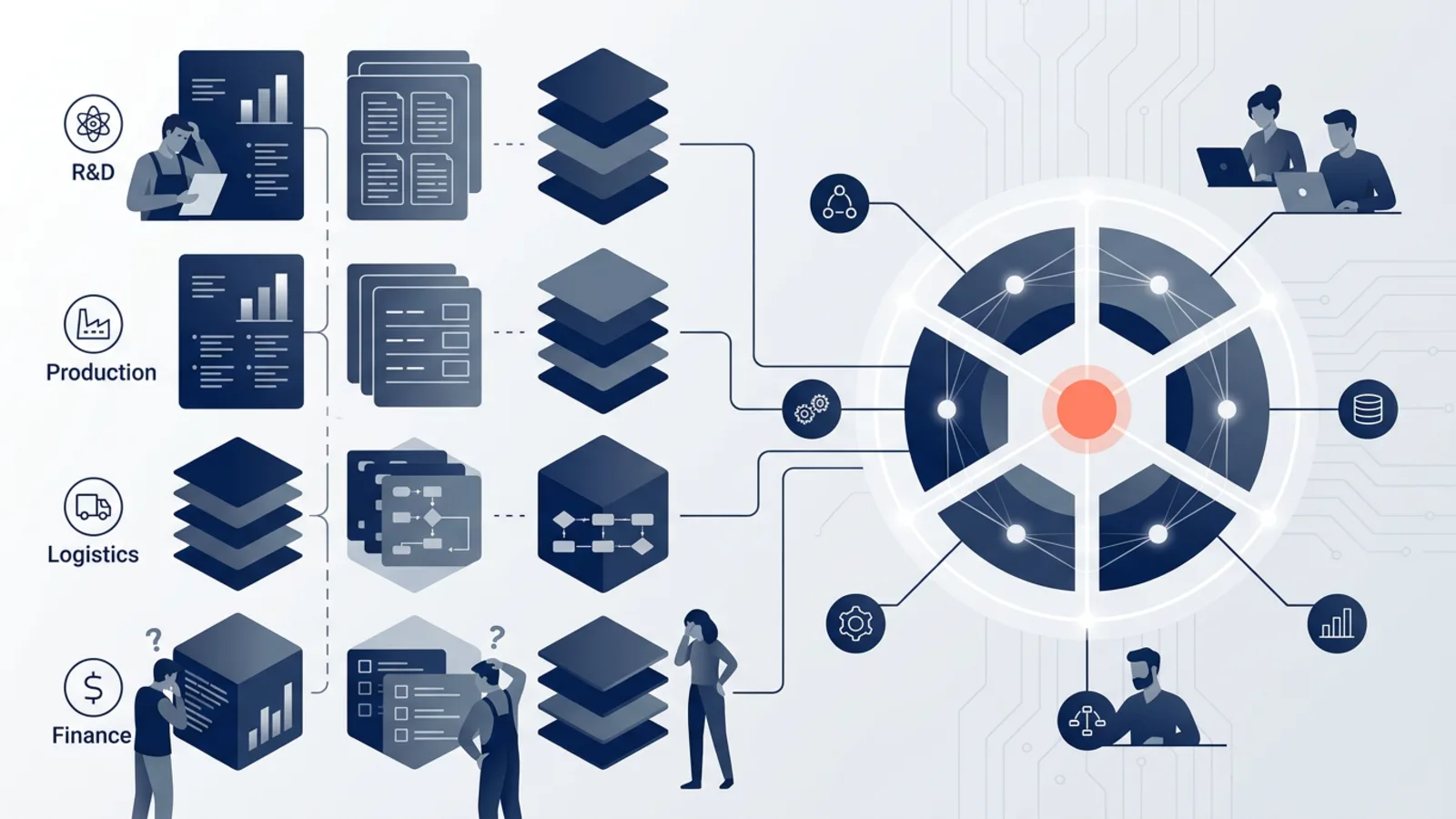
Yet many organizations unknowingly spend valuable time solving the same problems repeatedly because each department works with its own information rather than shared operational data.

The result is duplicated effort, inconsistent reporting, and slower decision-making.

How Duplicate Work Becomes Normal

As businesses grow, departments naturally adopt tools that meet their immediate needs. Sales may rely on a CRM. Purchasing maintains spreadsheets. Operations tracks production in another application. Finance works from accounting software.

Each system serves its purpose, but without integration, information becomes isolated.

Instead of sharing data, each department recreates it.

The Cost of Recreating Information

Disconnected systems often lead to:

  • Customer information entered multiple times
  • Duplicate inventory records
  • Separate production schedules
  • Multiple versions of vendor data
  • Conflicting reports across departments

These issues consume time that could be spent serving customers, improving operations, or growing the business.

Communication Shouldn’t Depend on Meetings

Many organizations compensate for disconnected systems by holding more meetings, sending more emails, and manually sharing spreadsheets.

While communication is important, it should not be the primary method for moving operational information throughout the business.

When information flows automatically, teams spend less time coordinating and more time executing.

Connecting Departments Instead of Recreating Data

This is where Claris FileMaker helps organizations create a connected operational environment. Rather than replacing every existing application, FileMaker can connect data across Sales, Purchasing, Operations, and Finance.

Teams can:

  • Work from shared operational data
  • Eliminate duplicate data entry
  • Improve reporting consistency
  • Automate information sharing between departments
  • Gain real-time visibility across the business

Every department benefits because everyone works from the same information.

Why This Matters

Operational efficiency isn’t just about improving individual departments. It’s about improving how departments work together.

When information flows seamlessly across the organization, decisions become faster, reporting becomes more reliable, and duplicate work begins to disappear.

If multiple departments are solving the same problems with different information, it may be time to rethink how your systems communicate. Creating a connected operational environment with Claris FileMaker helps eliminate duplicate effort and gives every team access to the information they need.

Interested in connecting your operational systems with Claris FileMaker? Reach out to Kyo Logic here.

Mapping Your Manufacturing Information Flow Before Buying New Software

When manufacturers encounter operational challenges, the first instinct is often to look for new software.

A new ERP.

A new scheduling platform.

A new inventory system.

Sometimes those investments are necessary. Often, however, the biggest opportunities become visible only after understanding how information currently moves throughout the business.

Technology Isn’t Always the First Problem

Most manufacturers already have systems that perform valuable functions.

The challenge is that those systems frequently operate independently, creating gaps between departments.

Information is re-entered, approvals are handled manually, and employees spend valuable time searching for data instead of acting on it.

Replacing software without addressing those gaps often leaves the underlying problems untouched.

Follow the Information, Not Just the Process

Before evaluating new technology, it’s valuable to ask questions such as:

  • Where is information first created?
  • Who needs it next?
  • How is it transferred between departments?
  • Where does manual data entry occur?
  • Which steps require spreadsheets or email?

Mapping these touchpoints often reveals opportunities for automation that weren’t immediately obvious.

Small Improvements Can Create Large Gains

Once information flow is understood, organizations often discover opportunities to:

  • Eliminate duplicate data entry
  • Automate approvals
  • Connect existing applications
  • Reduce reporting delays
  • Improve production visibility

In many cases, these improvements deliver measurable operational benefits without replacing core business systems.

Build Around Existing Investments

A platform like Claris FileMaker allows manufacturers to connect existing applications while building custom workflows that reflect how the business actually operates.

Rather than forcing teams into entirely new systems, organizations can:

  • Integrate operational data
  • Create centralized dashboards
  • Automate repetitive processes
  • Expand capabilities over time
  • Preserve existing software investments

This creates a practical path toward modernization without unnecessary disruption.

Why This Matters

Understanding information flow helps organizations make smarter technology decisions.

Instead of buying software to solve symptoms, manufacturers can identify the root causes of operational inefficiency and invest where they’ll have the greatest impact.

Before purchasing new software, take the time to understand how information moves through your organization. Mapping operational information flow often uncovers opportunities to improve visibility, reduce manual work, and increase efficiency using the systems you already have, supported by the flexibility of Claris FileMaker.

Boosting Productivity and Collaboration with FileMaker

Productivity isn’t just about working faster.

It’s about reducing friction between people, departments, and systems so work moves forward without unnecessary delays.

As organizations grow, collaboration often becomes more difficult because information becomes scattered across emails, spreadsheets, disconnected applications, and departmental tools.

The result is more meetings, more follow-up, and more time spent coordinating work instead of completing it.

Create a Shared Operational Environment

With Claris FileMaker, teams work from a centralized system instead of separate files or disconnected applications.

Sales, Operations, Purchasing, Finance, and Leadership can all access the information they need while viewing it through interfaces designed for their specific roles.

Everyone stays aligned without duplicating work.

Improve Communication Through Shared Visibility

Rather than asking for updates through email or chat, employees can view:

  • Project status

  • Production schedules

  • Customer information

  • Inventory levels

  • Order progress

  • Approval workflows

Because information updates in real time, everyone works from the same operational picture.

Automate Routine Collaboration

Many day-to-day interactions can be automated, including:

  • Approval requests

  • Status notifications

  • Task assignments

  • Report generation

  • Workflow routing

This reduces manual coordination while helping projects move more efficiently through the organization.

Support Every Department

Because FileMaker is highly customizable, each department can access the tools and information most relevant to its work while remaining connected to the same underlying data.

This creates better collaboration without sacrificing flexibility.

Why This Matters

The most productive organizations aren’t necessarily working harder. They’re spending less time searching for information, updating spreadsheets, and coordinating manual processes.

By creating a connected operational environment, Claris FileMaker allows teams to focus on meaningful work instead of administrative tasks.

Productivity and collaboration improve when information moves freely across the organization. With Claris FileMaker, businesses can centralize workflows, connect departments, and build systems that help teams work together more effectively as they continue to grow.


Interested in building a more connected workplace with Claris FileMaker? Reach out to Kyo Logic here.

The ROI of Custom Software Development

When organizations evaluate custom software, the first question is often, “How much will it cost?”

A better question might be, “How much are our current processes already costing us?”

Manual data entry, duplicate work, disconnected systems, and spreadsheet-based workflows rarely appear as line items on a budget. Yet together, they consume hundreds of hours every year and create operational inefficiencies that directly impact profitability.

The Hidden Costs of Manual Operations

Consider a business with ten employees who each spend just one hour per day on manual tasks such as:

  • Re-entering data

  • Building reports

  • Updating spreadsheets

  • Searching for information

  • Reconciling numbers

That’s fifty hours every week dedicated to work that adds little strategic value.

Over the course of a year, those hidden costs become substantial.

Operational Savings Extend Beyond Labor

Custom software also helps reduce:

  • Data entry errors

  • Production delays

  • Reporting bottlenecks

  • Missed revenue opportunities

  • Customer response times

These improvements often generate returns that exceed the direct labor savings alone.

Built Around Your Business

Unlike off-the-shelf software, Claris FileMaker solutions are designed around your existing workflows.

Instead of forcing your team to change how it works, FileMaker adapts to your business by:

  • Automating repetitive tasks

  • Connecting existing systems

  • Providing real-time dashboards

  • Supporting unique operational requirements

  • Expanding as your organization grows

Long-Term Value

The return on a custom solution compounds over time.

As processes improve and manual work declines, organizations continue realizing savings through:

  • Faster decision-making

  • Better collaboration

  • Improved customer service

  • Higher operational capacity

  • Greater scalability

Rather than purchasing another tool every few years, businesses build infrastructure that evolves alongside them.

Why This Matters

The true ROI of custom software isn’t measured solely by implementation costs.

It’s measured by the time recovered, the errors prevented, the opportunities captured, and the operational confidence gained.

Custom software is often viewed as an expense, but for many organizations it’s an investment in long-term efficiency and growth. When thoughtfully designed, a Claris FileMaker solution can deliver measurable returns for years to come.

Interested in calculating the ROI of a custom Claris FileMaker solution for your organization? Reach out to Kyo Logic here.


Signs It’s Time to Modernize Your Systems

Most organizations don’t wake up one morning and decide they’ve outgrown their systems.

Instead, the signs appear gradually. Reporting takes a little longer. Teams build another spreadsheet. Employees spend more time searching for information than acting on it. Individually, these issues seem manageable. Together, they’re often clear indicators that your business has reached the limits of its existing infrastructure.

If several of these warning signs sound familiar, it may be time to modernize your operational systems.

1. Reporting Takes Longer Every Month

If producing weekly or monthly reports requires pulling data from multiple spreadsheets or systems, your reporting process is no longer scaling with your business.

2. Teams Enter the Same Information More Than Once

Duplicate data entry wastes time and creates inconsistencies. When Sales, Operations, Purchasing, and Finance all maintain their own records, efficiency suffers.

3. Critical Processes Depend on Specific Employees

If only one person knows how a spreadsheet works or understands a particular workflow, you’ve created a single point of failure.

4. Simple Questions Take Too Long to Answer

Questions like:

  • Where is this order?

  • Is production on schedule?

  • Has this invoice been approved?

shouldn’t require multiple phone calls or spreadsheet searches.

5. Workflows Depend on Email

When approvals, updates, and status changes are managed through inboxes instead of systems, delays become inevitable.

6. Every New Customer Adds More Complexity

Growth should improve profitability, not increase operational chaos.

If every new customer creates more spreadsheets, manual work, or meetings, your systems aren’t scaling.

7. Different Departments Report Different Numbers

When leadership spends meetings reconciling reports instead of making decisions, it’s usually because there isn’t a single source of truth.

8. Every New Problem Gets Another Spreadsheet

Workarounds are helpful in the short term, but they shouldn’t become permanent infrastructure.

Modernization Doesn’t Mean Starting Over

Modernizing your systems doesn’t necessarily require replacing every application. In many cases, organizations achieve significant improvements by connecting existing systems, automating manual workflows, and centralizing operational information with Claris FileMaker.

This approach preserves existing investments while improving visibility, collaboration, and efficiency.

Why This Matters

Businesses evolve. Their systems should evolve with them.

Recognizing these warning signs early helps organizations modernize before operational bottlenecks begin limiting growth.

Modernization isn’t about adopting new technology for its own sake. It’s about building systems that support the business you’ve become, not the business you were five years ago.

Interested in evaluating whether your systems are ready for the next stage of growth? Reach out to Kyo Logic here.


How to Use Claris MCP to Connect FileMaker to AI Assistants

FileMaker data is becoming more accessible to AI workflows

For years, connecting FileMaker to external tools usually meant building integrations through APIs, middleware, custom scripts, or third-party services.

Claris MCP introduces a different pattern.

Claris describes MCP as a server that connects FileMaker databases to AI assistants and other MCP-compatible hosts. It acts as a bridge between Claris data and AI tools, letting you create connections, select tables and scripts, configure database tools, and generate configuration snippets for integration.

That makes it one of the more important recent developments for FileMaker teams exploring AI.


What MCP changes conceptually

The traditional integration question is:

“How do we build an API so another system can use FileMaker data?”

The MCP question is different:

“What tools should an AI assistant be allowed to use against this FileMaker system?”

That is a major shift.

Instead of exposing everything, you define controlled capabilities. Those capabilities may include access to selected tables, selected fields, and selected scripts.

That creates a more practical and safer path for AI-assisted work.


A simple architecture

A basic Claris MCP setup looks like this:

AI assistant or MCP-compatible client

       ↓

Claris MCP server

       ↓

Configured FileMaker connection

       ↓

Selected tables, fields, and scripts

       ↓

FileMaker database

The key point is that MCP is not magic access to everything. It is a configured bridge.

Claris’s getting started documentation describes the basic flow as creating a context, adding a connection to your FileMaker database, and generating a configuration snippet for the AI client.


Start with a read-only use case

The safest first use case is not “let AI update my database.”

A better first use case is controlled query and analysis.

For example:

  • summarize open support cases
  • find overdue project tasks
  • list customers with upcoming renewals
  • answer questions about current inventory
  • retrieve recent activity for a client
  • summarize records matching a specific condition

This lets the team learn how MCP behaves without giving the assistant permission to make operational changes too early.


Choose the right tables and fields

The most important implementation decision is what to expose.

Do not start by exposing the whole database. Start with a narrow business question.

For example, if the goal is to let an assistant answer questions about open service tickets, the MCP-accessible data might be limited to:

Tickets

– TicketID

– CustomerName

– Status

– Priority

– CreatedDate

– DueDate

– AssignedTo

– Summary


TicketNotes

– TicketID

– NoteDate

– NoteAuthor

– NoteText

You may not need billing fields, internal margin data, private employee notes, or unrelated customer tables.

Claris notes that FileMaker file accounts need access to the connected tables and fields intended to be available to the MCP client.

That means standard FileMaker privilege design still matters.


Use scripts as controlled actions

Tables let an assistant retrieve data. Scripts can let it do work.

This is where MCP becomes powerful, but also where discipline matters.

Instead of exposing broad write access, expose carefully designed scripts that perform specific operations.

For example:

Get Customer Renewal Summary

Create Follow-Up Task

Mark Ticket as Ready for Review

Add Note to Project

Generate Open Issues Report

Each script should validate its inputs, enforce business rules, and return clear results.

A good MCP-facing script should behave like a small internal API endpoint:

Input: structured JSON

Process: validate, act, log

Output: structured JSON result

That makes the AI assistant easier to control because it can only take actions through scripts you intentionally provide.


Privileges and extended privileges matter

MCP is not a reason to ignore FileMaker security. It depends on it.

Claris documents that accounts used for MCP connections must have both fmrest and fmodata extended privileges enabled. It also notes that field access must be available for the tables and fields you intend to expose.

That means MCP setup should involve a dedicated privilege set, not a full-access developer account.

A practical starting approach:

Create a dedicated MCP account

Create a dedicated privilege set

Expose only required layouts, tables, and fields

Enable only required extended privileges

Limit scripts to MCP-safe operations

Test with read-only workflows first

This keeps the integration more controlled.


Be careful with value lists on FileMaker Server 22.0.2

Claris notes a system limitation in FileMaker Server 22.0.2 where value list access should be disabled to prevent errors with the MCP connection.

That kind of detail matters in a real setup guide because it can save developers from chasing confusing connection issues.


Generate and use the client configuration

After configuring the MCP context and connection, Claris MCP can generate a configuration snippet for the MCP client. Claris’s integration documentation says you copy the JSON configuration and paste it into the MCP client settings so the assistant can access FileMaker data through the configured tools.

A typical implementation flow looks like this:

  1. Install and configure Claris MCP
  2. Create a context
  3. Add a FileMaker database connection
  4. Select approved tables and scripts
  5. Generate the MCP configuration snippet
  6. Add the snippet to the MCP-compatible AI client
  7. Test with low-risk prompts
  8. Review logs, permissions, and returned results

The important part is not the snippet itself. It is the preparation before the snippet is generated.


Design prompts around allowed tools

Once MCP is configured, users may be able to ask natural-language questions that invoke the configured tools.

For example:

Show me all open high-priority tickets assigned to Mark.

or:

Summarize overdue renewal follow-ups for this week.

For action-oriented workflows, keep prompts clear and constrained:

Create a follow-up task for customer ABC Manufacturing about their renewal.

But again, the assistant should only be able to do this if you exposed a safe script for creating follow-up tasks.


Add logging and review

AI-assisted access to FileMaker should be observable.

For any MCP-enabled workflow, consider logging:

  • Who used the assistant
  • What tool was called
  • What inputs were passed
  • What script ran
  • What record was affected
  • Whether the action succeeded or failed

This is especially important once you allow script-based actions.

A good internal log table might include:

MCPLog

– LogID

– Timestamp

– User

– ToolName

– InputJSON

– ResultJSON

– RelatedRecordID

– Status

That gives administrators a way to review behavior and troubleshoot unexpected results.


Where Claris MCP fits best

Good early use cases include:

  • Internal data lookup
  • Operational summaries
  • Task creation through controlled scripts
  • Customer or project brief generation
  • Support case review
  • Management reporting prompts

Riskier use cases include:

  • Financial updates
  • Compliance decisions
  • Mass record changes
  • Anything involving sensitive data without strict privilege design
  • Any action that bypasses existing FileMaker validation

MCP is strongest when it gives AI a controlled way to interact with FileMaker, not when it opens the database broadly.


Final thought

Claris MCP is not just another integration option. It changes the interface between FileMaker and AI systems.

Instead of building one-off API endpoints for every assistant-driven use case, developers can expose selected FileMaker data and scripts as controlled tools.

That is powerful, but it should be approached carefully.

Start read-only.
Expose less than you think you need.
Use scripts for controlled actions.
Keep FileMaker privileges tight.
Log what the assistant does.

That is how MCP becomes useful without turning into a governance problem.